Sounds of Distant Worlds – Balogh Máté's Choral Works
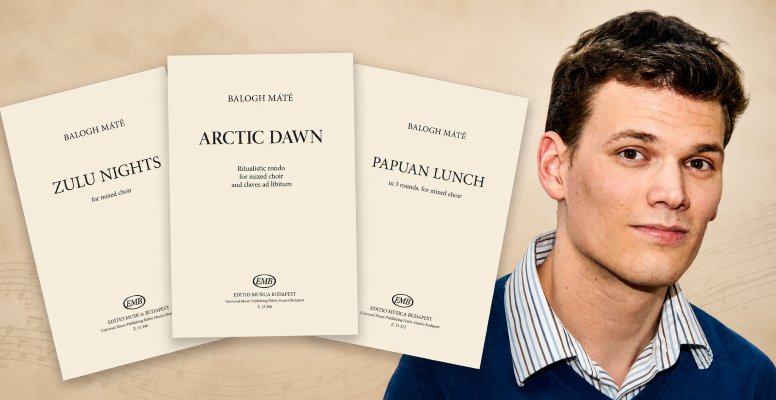
Composer Balogh Máté (*1990) has long been fascinated by cultures beyond Europe. So far, this interest has found expression in three works for mixed choir: Zulu Nights (2023), Arctic Dawn (2025), and Papuan Lunch (2026). Rather than being folk song arrangements in the traditional sense, these compositions are contemporary musical reflections inspired by the languages and texts of different cultures. Each work evokes a different distant world.
Zulu Nights is based on a South African folk text. Built on a distinctive harmonic progression, the piece allows choir members to improvise individual melodic lines above the recurring accompaniment, in a manner reminiscent of the American spiritual tradition. This gives performers an unusual degree of freedom, making each performance a unique and unrepeatable communal experience.
Described by the composer as a "ritual rondo",
Arctic Dawn is a three-minute work based on a text from Franz Boas's collection of Inuit oral poetry. Here, the text functions not only as literary material but also as an integral musical layer, shaping the structure of the composition. Its recurring formulas evoke the atmosphere of an ancient ritual, reflecting the close relationship between nature, community, spirituality, and music in Inuit culture. The piece thus paints both the image of an Arctic dawn and the musical imprint of a distant cultural tradition.
Papuan Lunch approaches its subject from yet another perspective. While the Zulu and Inuit works are based on narrative texts, this composition draws on the proper names found in Papuan mystical folktales. The repeated invocation of these names creates both compelling rhythmic patterns and a distinctive sound world, evoking the mysterious, isolated atmosphere of the Papuan rainforest. The work was commissioned by the Béla Bartók International Choir Competition in Debrecen and was premiered by the Kodály Choir Debrecen under the direction of Zoltán Kocsis-Holper in July 2026.
What unites these three choral works is that they do not seek to imitate folk music directly. Instead, Balogh Máté draws inspiration from the sounds, rhythms, and cultural backgrounds of different languages, transforming them into a distinctive contemporary musical language of his own. Together, these works open a window onto distant cultures while offering choirs fresh artistic challenges and audiences a truly distinctive concert experience.